


What is a Hallmark? A Guide to UK Jewellery Hallmarking
We hallmark all of our jewellery at The London Assay Office, one of the UK’s most historic and respected assay offices. Hallmarking is an ancient system for testing and certifying precious metals, dating back to 1300 when Edward I introduced the requirement for gold and silver to be marked with the iconic leopard’s head.
Today, hallmarking remains a cornerstone of trust in the jewellery industry - and a legal requirement in the UK.
What Does Hallmarking Mean?
A hallmark is an official stamp applied to precious metal items that certifies their authenticity, purity, and origin. It confirms that your jewellery meets strict UK standards for metal fineness.
In simple terms, hallmarking protects you as a buyer - ensuring that a piece described as gold, platinum, silver, or palladium is genuinely what it claims to be.
UK Hallmarking Laws Explained
Under UK hallmarking law, precious metal items must be hallmarked if they exceed certain weights:
Gold: over 1 gram
Platinum: over 0.5 grams
Silver and palladium are also subject to hallmarking requirements
This legal framework ensures transparency in the jewellery market and protects against misleading or counterfeit materials.
Why Hallmarking Matters When Buying Jewellery
It can be difficult to identify precious metals by sight or touch alone. Most fine jewellery is crafted from alloys - a blend of metals designed to enhance durability, strength, and colour. Hallmarking acts as a protection for consumers by certifying the precious metal content of the piece so that the buyer knows that the item is genuinely what the seller says it is.
For example:
Gold is often alloyed to create 18ct, 14ct, or 9ct gold
Platinum is combined with other metals to improve wearability
Silver is typically used as sterling silver (925) rather than pure silver
A hallmark acts as a guarantee of metal purity, giving you confidence in your purchase - whether you’re investing in an engagement ring, wedding band, or bespoke piece. Different precious metals have different qualities - you can read more about them here.
What Does a UK Hallmark Include?
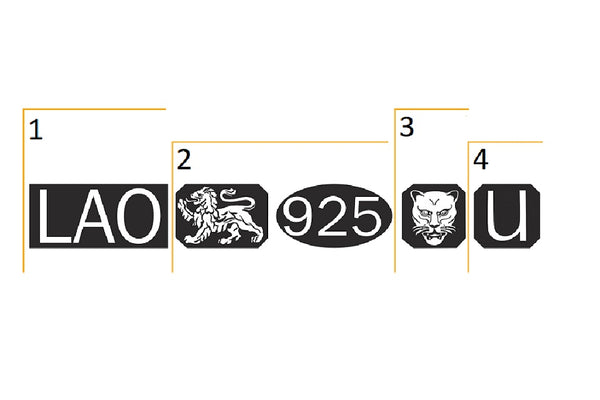
A full UK hallmark is made up of several symbols which you can see in the diagram attached - each with a specific meaning:
1. Sponsor’s Mark
The sponsor's mark dentifies the maker or brand that submitted the piece for hallmarking
You’ll find Flora’s mark, FAB, stamped on every design
2. Fineness Mark
Indicates the purity of the metal (e.g. 750 for 18ct gold, 950 for platinum)
3. Assay Office Mark
Shows where the piece was tested and hallmarked (e.g. London, Birmingham)
4. Date Letter (optional)
Indicates the year the item was hallmarked
You may also see an SMO or Fairmined mark as recently it's become possible to mark designs to indicate that they are made of ethical gold. Find out more about ethical gold here. Together, these marks form a traceable record of your jewellery’s origin and composition.
The Role of Assay Offices in the UK
Assay offices are independent organisations responsible for testing precious metals and applying official hallmarks. The UK has four primary assay offices, with The London Assay Office being one of the oldest.
Each office uses its own unique symbol, adding another layer of authenticity and heritage to your piece.
Hallmarks as a Mark of Craftsmanship and Trust
Beyond legal compliance, a hallmark is a mark of integrity. It reflects a commitment to quality, transparency, and responsible craftsmanship.
At Flora Bhattachary Fine Jewellery, every piece is thoughtfully designed and handcrafted in our Hatton Garden studio, then independently verified through hallmarking. It’s part of our promise that what you wear is not only beautiful, but genuinely made to last.
How to Identify a Hallmark on Your Jewellery
Hallmarks on jewellery are usually very small and discreet - although in more recent times designers have also made them a feature. You can often find your hallmark:
Inside the band of a ring
On the clasp of a necklace or bracelet
Along the inner edge of a bangle
You may need a magnifying glass or jeweller’s loupe to see them clearly.
Learn More About Hallmarking
If you’d like to explore hallmarking in more detail, you can visit The London Assay Office website here for further guidance.
If you have any questions about hallmarking, bespoke jewellery, or our materials, we’d be delighted to help - just get in touch.


